
Survival analysis refers to a family of statistical procedures where the outcome variable of interest is time until an event occurs. Survival analysis is a powerful analytical approach that is often employed in medical applications where researchers are interested in modelling the effects of different treatments or conditions upon patient survival time. Nevertheless, this same approach is also used in other industry applications such as insurance premium setting, customer churn modelling and predicting asset failure in maintenance regimes.
Introducing survival analysis
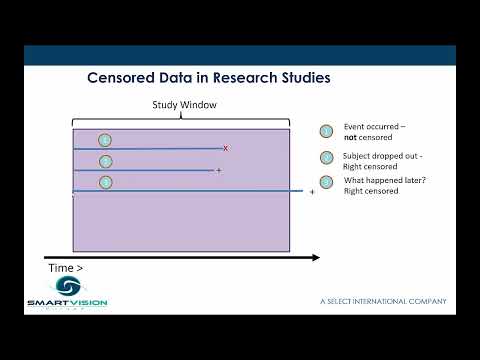
This video looks at the key concepts that underpin survival analysis such as time-to-event data, censored cases and the different survival analysis procedures available in IBM SPSS Statistics.
Exploring life tables
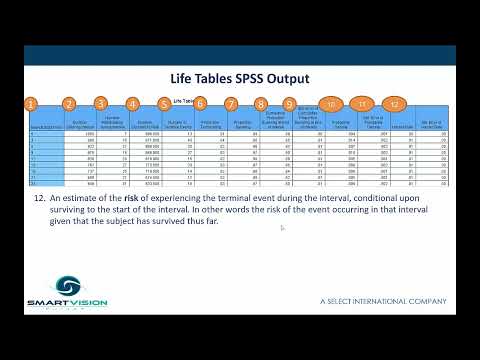
Explores the Life Tables procedure and introduces many of the key concepts of survival analysis such as cumulative survival, hazard rates and survival curves
The Kaplan Meier procedure
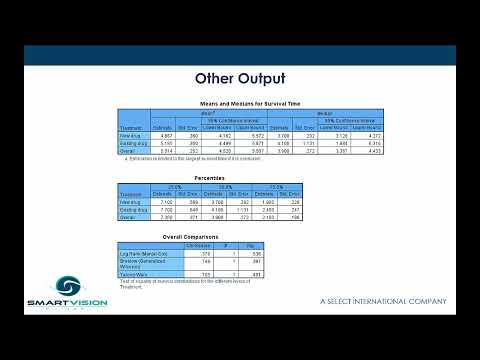
Kaplan Meier: looks at the non-parametric Kaplan Meier procedure including tests of equality of survival distributions and the difference between survival and hazard functions
Introduction to Cox regression
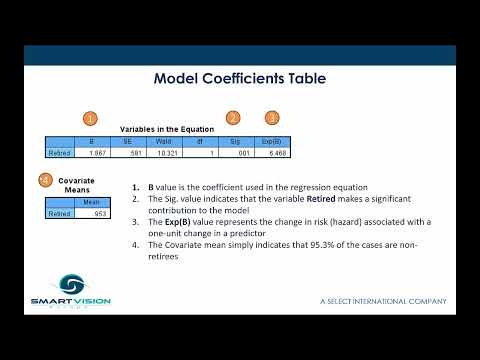
Cox Regression: introduces the Cox Regression method and explains the proportional hazards model. Shows how to interpret the output from Cox Regression using a simple model with a single predictor
Cox regression with multiple variables

Cox Regression with multiple variables: shows how to create a more complex Cox Regression model. Also introduces the Cox Regression with Time Dependent Covariates procedure